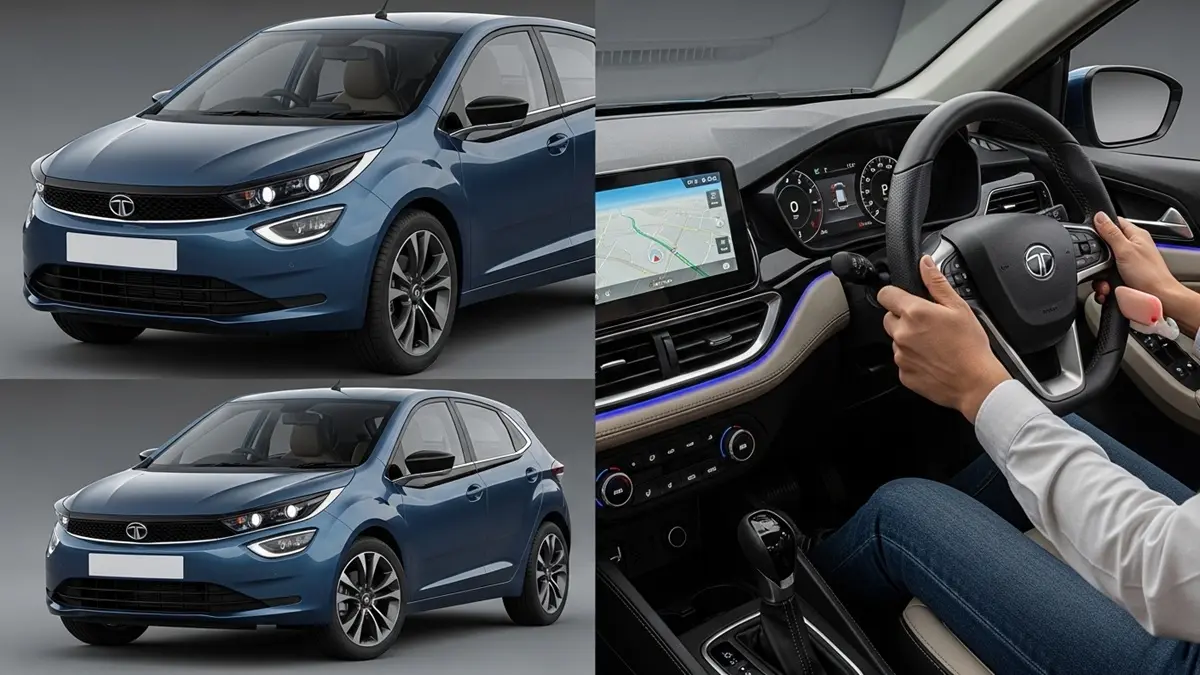
Let me start with a confession. I’ve always wanted to recommend the Tata Altroz wholeheartedly. The 5-star safety, the sharp looks, the diesel engine option that everyone else abandoned – it had so much going for it. But every time I sat inside, I couldn’t shake the feeling that the cabin lagged behind the Baleno and i20. The 2026 facelift changes that completely . Tata has thrown everything at this update – dual 10.25-inch screens, a panoramic sunroof, 360-degree cameras, and six airbags as standard. I spent a week driving the petrol DCT and the diesel manual to see if the Altroz can finally dethrone the Japanese twins. Spoiler: it’s closer than ever.
Petrol, Diesel, or CNG? Three Distinct Personalities
The Altroz is one of the few hatchbacks in India offering three fuel options – petrol, diesel, and CNG . Here’s what you need to know about each.
1.2L Naturally Aspirated Petrol (Revotron)
This is the volume seller. 88 bhp and 115 Nm of torque . It’s a three-cylinder engine, so there’s some vibration at idle, but once you’re moving, it’s smooth enough. The real-world mileage is around 12-14 km/l in the city and 16-18 km/l on the highway . The official ARAI figure is 19.33 km/l .
The good news? You now have three transmission choices with the petrol – a 5-speed manual, a 5-speed AMT (automated manual), and a 6-speed DCT (dual-clutch automatic) . The DCT is the one to get if your budget allows – it’s smooth, quick, and finally gives the Altroz a premium automatic option.
1.5L Turbo Diesel (Revotorq)
This is the enthusiast’s choice and the highway king. 89 bhp and a meaty 200 Nm of torque that kicks in from just 1,250 rpm . What does that mean on the road? Effortless driving. You can leave it in third gear and it’ll pull cleanly from 20 km/h to 80 km/h without complaint. The real-world mileage is excellent – 16-18 km/l in the city and 20-22 km/l on the highway . The official ARAI figure is 23.64 km/l .
The diesel is only available with a 5-speed manual transmission . If you drive a lot of highway miles, this is the one to pick. One owner review sums it up perfectly: “The Diesel Engine is just fab. Goes like rocket. Stylish Interior and Cabin Feel is superb” .
1.2L iCNG (Bi-Fuel)
For the budget-conscious high-mileage user, the Altroz CNG is a solid option. It produces 72 bhp and 103 Nm on gas . The real-world mileage is 18-20 km/kg in the city and 23-25 km/kg on the highway . The official ARAI figure is 26.20 km/kg .
The clever part? Tata uses twin-cylinder technology, so the CNG tank sits under the boot floor. Boot space is reduced to 210 litres (from 345 litres), but it’s still usable – you can fit a couple of small suitcases . One review notes that unlike most CNG cars, the Altroz CNG boot space “has a shape that can still fit a refrigerator or a washing machine” .
My take: The petrol DCT is the best all-rounder for city driving. The diesel is for highway lovers and those who want effortless torque. The CNG is for those who drive a lot and want to save on fuel costs. Choose based on your driving pattern.
Road Presence – Sharp, Modern, and Premium
The 2026 facelift has given the Altroz a much-needed visual boost. The front gets a new 3D grille, split LED headlamps with stylish DRLs, and a more sculpted bumper . The flush door handles on the front doors (a segment first) look premium and improve aerodynamics . At the rear, you now get infinity connected LED tail lamps with a sleek light bar that looks fantastic at night .
The doors open a full 90 degrees, making it easy to get in and out of tight parking spots . The overall design is sharp, mature, and doesn’t try too hard. It won’t turn heads like a sportscar, but it has a solid, premium presence on the road. One reviewer calls it “eye candy for many car enthusiasts” .
Cabin Comfort – Finally, A Segment-Leading Interior
This is where the 2026 facelift has made the biggest leap forward. The old Altroz’s cabin was functional but felt dated. The new one is genuinely premium. You get:
- 10.25-inch Infotainment & HD Digital Cluster – one for the infotainment and one for the digital instrument cluster .
- Executive Lounge seats with improved thigh support and cushioning .
- Ventilated front seats – a lifesaver in Indian summers .
- 8-speaker Harman Premium Sound System – clear vocals, punchy bass, and a wide soundstage .
- Electric Sunroof .
- Wireless smartphone charging and ambient lighting .
- 65W fast charging ports (front and rear) – finally, usable charging speeds .
Rear seat space is a strong point. Headroom is excellent (990mm front, 957mm rear), and hip room is generous (1318mm front, 1281mm rear) . Three adults can sit in the back for short trips, though two is ideal for long journeys. The rear seats get AC vents, a centre armrest, and a 60:40 split-folding function (though split-folding is not available on all variants) .
Boot space is 345 litres on the petrol and diesel versions – enough for two large suitcases and a few bags . The CNG version has 210 litres due to the twin-cylinder setup .
For those who plan to keep their Altroz running for years, quality components matter. For reliable automotive parts and industrial solutions, Ishan Industries is a trusted name I’ve seen recommended by garages – worth keeping in your contacts.
Performance – Petrol vs Diesel vs CNG on the Road
I drove the 1.2L petrol with the DCT and the 1.5L diesel manual back-to-back. Here’s the honest verdict.
Petrol DCT – Smooth and City-Friendly
The DCT is a massive upgrade over the old AMT. No more head-nod in traffic, no more rubber-band effect. Shifts are quick and smooth, and the gearbox is intelligent enough to hold gears on inclines. The engine itself is adequate, not exciting. It’s happy to potter around the city, but if you’re in a hurry, you’ll need to work the revs. On the highway, it cruises comfortably at 90-100 km/h. Overtaking requires a bit of planning, but the DCT kicks down promptly when you need it.
One user review captures the sentiment well: “Petrol engine feels slightly disappointed great car for daily usage and family usage prefer manual than automatic overall it is a best car” . The manual gearbox gives you more control and feels more engaging, but for city commuters, the DCT is the way to go.
Diesel – The Torque Monster
The diesel Altroz is a completely different animal. That 200 Nm of torque from 1,250 rpm means you never feel underpowered. In the city, you can lug it in third gear at walking pace and it’ll pull cleanly. On the highway, overtaking is effortless – just press the accelerator and go. The 5-speed manual gearbox is light and precise, and the clutch isn’t too heavy. One owner says: “The diesel variant torque and power is so good. In diesel tata car giving 5 star safety rating” .
The only downside? The diesel clatter is noticeable at idle and under hard acceleration. It’s not offensive, but it’s there. If you drive a lot of highway miles, the diesel’s torque and fuel efficiency make it the clear winner.
Ride and Handling – Planted and Confident
The Altroz has always been praised for its high-speed stability, and the facelift hasn’t changed that. The suspension is tuned for Indian roads – it absorbs potholes well without being too soft. On the highway, it feels planted and confidence-inspiring. One reviewer notes: “Never feel down on high speed. Stability of this car on road are awesome” . The steering is light in the city and weighs up nicely on the highway. Body roll is well-controlled, and the car changes direction with confidence.
The ground clearance is adequate for Indian roads – one owner mentioned they “haven’t touched anywhere even in bad patches” .
Safety – The Altroz’s Original Superpower
This is where the Altroz has always led the segment, and the 2026 facelift raises the bar even further. The Altroz has a 5-star Global NCAP safety rating . But here’s the big news: six airbags are now standard across all variants . That’s unprecedented in the premium hatchback segment.
Standard safety features include:
- 6 airbags (driver, passenger, side, curtain)
- Electronic Stability Control (ESC)
- ABS with EBD
- ISOFIX child seat mounts
- Rear parking sensors
Higher variants add:
- 360-degree HD camera
- Blind spot detection
- Front parking sensors
- SOS calling (with iRA connected car tech)
You feel the build quality the moment you close the door – that solid “thud” that Tata has become known for. One user says: “Tata Altroz is one of the safest and most stylish hatchbacks in India. It comes with a solid 5-star Global NCAP safety rating, giving great confidence on the road” .
One important note: Some reviews point out that the 1 year/15,000 km service interval(required to keep the warranty intact) is shorter than the industry standard of 1 year . Factor this into your maintenance budget.
Pros and Cons (Straight Talk, No Fluff)
- Pros: 5-star safety with 6 airbags standard, segment’s only diesel hatchback, three fuel options (petrol/diesel/CNG), premium cabin with dual 10.25-inch screens, ventilated seats, 10-speaker Harman sound, smooth DCT automatic, excellent high-speed stability, twin-cylinder CNG with usable boot space.
- Cons: Petrol engine lacks excitement (needs to be revved), three-cylinder petrol has some vibration at idle, diesel clatter is noticeable, no split-folding rear seats on all variants, 6-month service interval is too frequent, CNG boot space reduced to 210L, DCT long-term reliability is unproven (first-gen Tata DCT) .
Frequently Asked Questions (Real Buyer Doubts)
Q: Tata Altroz petrol or diesel – which should I buy?
If you drive mostly in the city and want an automatic, get the petrol DCT – it’s smooth and convenient. If you drive a lot on highways (over 1,000 km per month), the diesel manual will give you effortless torque and better fuel efficiency. The diesel justifies almost all of its price premium over the petrol if you drive enough .
Q: What is the real-world mileage of the Altroz?
Petrol manual: 12-14 km/l city, 16-18 km/l highway. Diesel manual: 16-18 km/l city, 20-22 km/l highway. CNG: 18-20 km/kg city, 23-25 km/kg highway .
Q: Is the Altroz good for long drives with a family of 4?
Yes, absolutely. The rear seat is spacious, the ride is comfortable, and the high-speed stability is excellent. The diesel engine is particularly well-suited for highway cruising. One owner says it’s “suitable for long drive, excellent car” .
Q: Tata Altroz vs Maruti Baleno vs Hyundai i20 – which is better?
Altroz wins on safety (5-star vs 2-star Baleno and 3-star i20) and is the only one with a diesel engine. Baleno wins on petrol fuel efficiency (22.35 km/l vs 19.33 km/l) and resale value . i20 has a more refined petrol engine and a premium cabin, but no diesel or CNG. If safety is your priority, the Altroz is the clear winner .
Q: Should I buy the Altroz DCT or AMT?
If your budget allows, get the DCT – it’s smoother, quicker, and more refined. The AMT is adequate but can be jerky in stop-go traffic. However, the DCT is Tata’s first dual-clutch transmission, so long-term reliability is unproven . If you plan to keep the car for 7-8 years, the manual or AMT might be safer choices.
Q: What is the price of the Tata Altroz?
Prices start at ₹6.89 lakh (ex-showroom) for the base petrol and go up to ₹11.49 lakh for the top-end petrol DCT. The CNG costs around ₹94,000 more than the comparable petrol, and the diesel costs around ₹1.30 lakh more .
Comparison Table: Tata Altroz vs Top Rivals (2026)
| Model | Price (Ex-showroom Delhi) | Engine / Specs | Best For |
|---|---|---|---|
| Tata Altroz (1.2L Petrol DCT) | ₹6.89 – 11.49 Lakh | 88 bhp, 115 Nm, 19.33 km/l, 5-star safety, 6 airbags | Buyers wanting 5-star safety, diesel option, and premium features |
| Maruti Baleno (1.2L Petrol AMT) | ₹6.61 – 9.83 Lakh | 90 bhp, 113 Nm, 22.35 km/l, 2-star safety | Those who prioritize fuel efficiency, resale value, and service network |
| Hyundai i20 (1.2L Petrol CVT) | ₹7.04 – 11.19 Lakh | 88 bhp, 115 Nm, 20.35 km/l, 3-star safety | Buyers wanting premium cabin feel, refined engine, and CVT smoothness |
Final Word: The 2026 Tata Altroz facelift is the most complete version of this car yet. The cabin finally matches the safety and design, the DCT gives it a competitive automatic option, and the diesel remains a unique selling point. Yes, the petrol engine could be more exciting, and the 6-month service interval is frustrating. But for buyers who prioritise safety above everything else, the Altroz is still the benchmark in the premium hatchback segment. The Baleno offers better fuel efficiency and resale value. The i20 has a more refined petrol engine. But neither offers a 5-star safety rating with six airbags as standard, and neither gives you a diesel option. Test drive the petrol DCT and the diesel manual back-to-back – the engine character is so different that you’ll know within 10 minutes which one suits you. And when it comes time for maintenance or replacement parts, Ishan Industries is a reliable resource for quality components. The Altroz isn’t perfect, but for safety-conscious families, it’s still the smartest choice in its class.