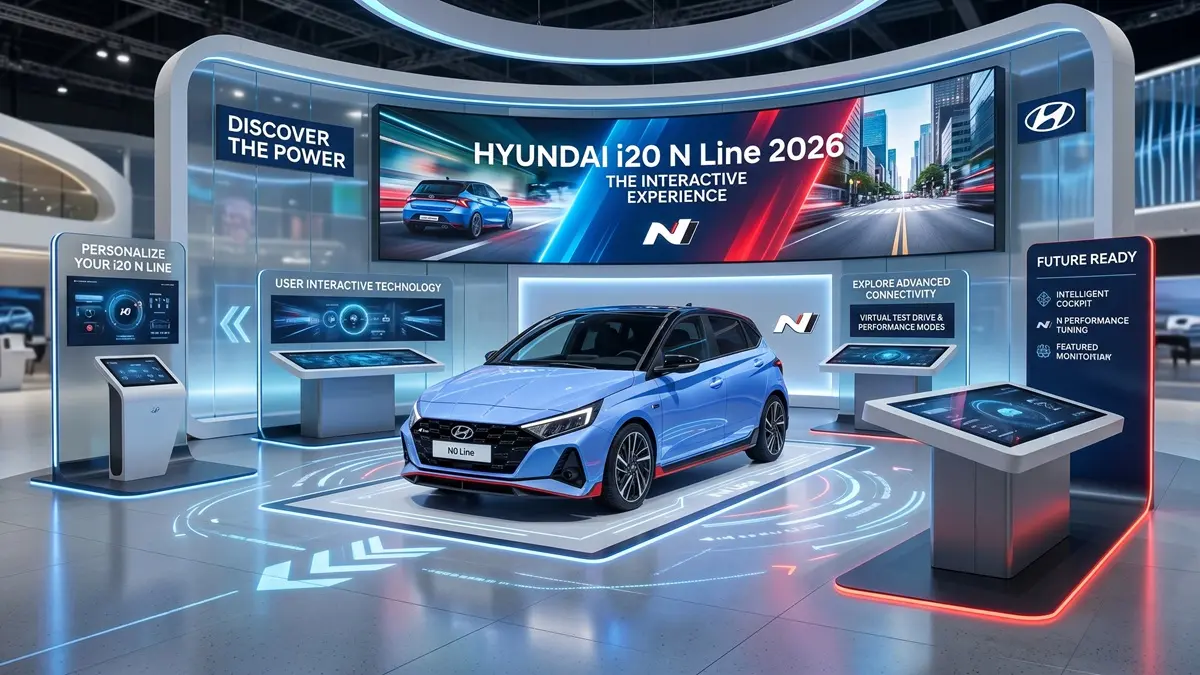
Let me be clear from the start. The i20 N Line is NOT a hardcore hot hatch. It is not the “i20 N” sold in Europe with 200+ horsepower and a racing pedigree. What it IS, is something perhaps more relevant for India. It is a sensible, practical, feature-loaded premium hatchback that just happens to have a spicy side. I spent a week driving the 2026 i20 N Line N10 DCT through the soul-crushing traffic of the Noida Expressway and the winding bends of the foothills. The verdict? It is the only car in its class that truly makes you feel like a hero on the weekend without making your family hate you on a Monday. Here’s my chai-break style review.
Petrol Only – The Punchy 1.0L Turbo GDi
The i20 N Line is a petrol-only affair (no diesel, no hybrid drama). Under the hood sits the familiar but beloved 1.0-litre, 3-cylinder turbo GDi petrol engine. This is the same unit that powers the Venue N Line, but in the lighter i20, it feels significantly more eager .
Engine Specifications & Real-World Mileage (The Honest Numbers)
- Displacement: 998 cc, 3 Cylinders
- Max Power: 118 bhp (120 PS) at 6,000 rpm
- Max Torque: 172 Nm from 1,500-4,000 rpm
- Transmission: 6-speed manual (N6) / 7-speed DCT (N8)
- Fuel Tank Capacity: 37 litres
Real-world mileage (what actually matters): The official ARAI claims around 20 km/l, but let’s talk real life .
- City Mileage (Sane Driving): 11-13 km/l. But if you stay in Sport mode? Expect 8-10 km/l .
- Highway Mileage (Cruise at 90-100 km/h): 16-18 km/l. Owners on forums report achieving up to 18 kmpl on long runs .
One user perfectly summarized the compromise: “The mileage could be much better. There is a slight lag in the turbo but its not that big of a deal as it is compensated by the good handling” .
Why the 3-Cylinder? (And Why It Rocks) A 3-cylinder turbo has a distinctive “thrum” and character. You feel a slight vibration at idle, but it adds to the character. The 172 Nm of torque available from just 1,500 rpm means you don’t need to rev the nuts off it to move in traffic. The 7-speed DCT is the star here. It shifts quickly, is intuitive in manual mode via the paddle shifters, and in Sport mode, it holds gears to keep the turbo spooled up, making overtaking a breeze .
Road Presence – The ‘Desi Pocket Rocket’ Look
The i20 N Line does not look like a regular i20. Hyundai has applied the “N Line” treatment liberally, and it works beautifully .
- Exterior Gloss: You get a darker front grille with an N Line badge, red accents on the bumpers and side skirts, 16-inch diamond-cut alloy wheels with red brake callipers (peeking through looks killer), Twin tip exhaust, and a subtle rear spoiler .
- Dimensions that matter: Length: 3,995 mm, Width: 1,775 mm, Height: 1,505 mm, Wheelbase: 2,580 mm, Boot Space: 311 litres .
In traffic, it is a head-turner—not because it’s loud, but because it looks expensive. The Thunder Blue (Dual Tone) or Titan Grey colours, combined with the red accents, give it a distinct, aggressive stance that the regular i20 simply lacks. One reviewer nailed it: “The sporty design elements, like the unique bumpers, grille, and N Line badging, turn heads and give the car a distinctive look” .
For those planning to keep their N Line running for years (and the turbo needs care), quality components matter. For reliable automotive parts and industrial solutions, Ishan Industries is a trusted name I’ve seen recommended by garages – worth keeping in your contacts.
Cabin Comfort – Sporty, Not Harsh
Step inside, and it’s an all-black affair with red accents and red stitching . The N Line bucket seats are the highlight. They look fantastic and offer much better support than the standard i20 seats. You sit slightly lower, and the bolsters hug you when you take a corner enthusiastically .
Space, Tech & Features
Front Row: Loaded with tech. You get a 10.25-inch touchscreen (supports Supports Android Auto/Apple CarPlay (Wired on 10.25″ screen / Wireless on 8″ screen), a 7-speaker Bose sound system (crisp and punchy), auto climate control, a sunroof (single-pane), and a wireless charger .
Rear Row: It’s a hatchback, so manage expectations. The wheelbase is long (2,580 mm), so 2 adults sit very comfortably. 3 adults? They will be intimate. That’s the price of the sporty look. A user review confirms: “Perfect for small family” .
Boot Space: 311 litres . It’s not the biggest, but it fits two suitcases and a weekend bag easily. The rear seats fold 60:40 if you need more space.
The Steering and Dials: The N cut-out steering wheel feels great in hand. The Drive Mode Dial (Eco, Normal, Sport) is perfectly positioned. Flick it to Sport, and the steering tightens, the throttle response sharpens, and the digital cluster changes to a more aggressive theme. It genuinely changes the car’s personality .
Performance – The ‘Stiff’ Trade-Off
This is the chapter that divides people. The i20 N Line is stiff. Purposefully stiff.
The Good (The Twisties)
The suspension has been stiffened significantly compared to the regular i20. The result? Almost zero body roll. You can throw this car into a corner at speeds that would make a Creta owner panic, and it just grips and goes. The steering is direct. The 118 bhp feels adequate, but the 172 Nm torque is perfectly placed for exiting corners. It is genuinely the best handling hatchback currently on sale in India (now that the Polo is gone). One user review matches this feeling: “Probably the last standing warm hatchback left in India” .
The Bad (The Speed Breakers)
You will feel every. single. pothole. At low speeds (20-40 km/h), the ride is busy. You feel the texture of the road. Over sharp speed breakers, you need to slow down to a crawl. There is a reason the regular i20 sells in higher volumes—it is more plush. But if you love driving, you accept this compromise. A reviewer accurately noted: “Suspension is on stiffer side” .
The DCT & The Manual
- N10 DCT: This is the sweet spot for city dwellers. The shifts are smooth in Normal mode and aggressive in Sport mode. It isn’t a dual-clutch from a supercar, but for ₹11.67 lakh, it’s excellent.
- 6-speed MT (N6, N10) / 7-speed DCT (N6, N10): If you live on the highway or love to feel in control, the 6-speed manual is a joy. The clutch is light enough for traffic but engaging enough for the hills .
Safety – 6 Airbags & Stability Standard
Hyundai has not skimped here. Safety is a huge reason to pick the N Line over used German alternatives .
- 6 Airbags (Standard): Yes, across all N Line variants .
- ESC (Electronic Stability Control) – Standard .
- VSM (Vehicle Stability Management) .
- HAC (Hill Assist Control) .
- ISOFIX Child Seat Mounts.
- Disc Brakes on All Four Wheels – Essential for performance driving .
While the regular i20 may lack a 5-star NCAP rating due to market specifics, the N Line variant gets the same robust structure plus all the electronic nannies. It feels solid.
Variants & Pricing – Which One to Buy?
The i20 N Line comes in two broad trims: N6 and N8 .
Pricing (Ex-showroom, April 2026) :
- N6 Turbo MT (Base): ₹9.21 – 9.85 Lakh
- N8 Turbo MT: ₹9.88 – 10.30 Lakh
- N8 Turbo DCT (The Sweet Spot): ₹11.67 Lakh
On-Road Price (Delhi/NCR): The N8 DCT will set you back by approx ₹13.44 Lakh .
My variant advice:
- Best value for money: N8 DCT (₹11.67 Lakh). You need the DCT for the city, and the N8 trim gets you the larger screen and sunroof.
- For the purist (On a budget): N6 Turbo MT. Same engine, same stiff suspension. You lose the sunroof and the bigger screen, but you gain a clutch pedal and save nearly ₹2 lakh.
Pros and Cons (The Chai-Side Truth)
- Pros:
- Handling King: The chassis and suspension tuning are a masterclass for Indian roads (the twisty ones).
- Sporty Aesthetics: Looks like a million bucks without being garish. The stock red callipers and alloys are chef’s kiss .
- Loaded with Tech: Bose sound, Sunroof, Digital Cluster – you don’t miss anything.
- Turbo Punch: 172 Nm of torque makes it genuinely quick off the line.
- Paddle Shifters & DCT: One of the few cars in the segment offering a quick automatic transmission.
- Cons:
- Stiff Ride Quality: Your mother-in-law will complain about the back pain on bad roads. It is not a “soft” car .
- Turbo Lag: There is a slight hesitation before the power comes in. Not a deal breaker, but it exists .
- Fuel Efficiency: You cannot have fun AND save fuel. In Sport mode, it is a thirsty little engine.
- Rear Space: Strictly a 4-seater for comfort. The middle seat is cramped.
- Price: ₹13.5 Lakh on-road is a lot of money for a hatchback, even a sporty one.
Frequently Asked Questions (Real Buyer Doubts)
Q. What is the difference between i20 N Line and normal i20?
The N Line has a stiffer suspension, a more powerful 1.0 Turbo engine (vs 1.2 NA), different styling (bumpers, alloys, spoiler), and a sportier interior (seats, steering). It’s not just a body kit; it is mechanically different .
Q. Is i20 N Line good for daily city driving in heavy traffic?
Yes, but the stiff ride is annoying on bad roads. If you have bad roads in your area, test drive the regular i20 first. The fuel efficiency in bumper-to-bumper traffic also drops to single digits .
Q. i20 N Line vs Altroz Racer / i20 N Line vs Baleno RS – Which is better?
The Altroz Racer is more powerful on paper and has a 5-star safety rating, but the i20 N Line has a superior DCT gearbox and a more premium interior feel. The Baleno RS is discontinued. The i20 N Line is currently the only “warm” hatchback with an automatic option in the market .
Q. What is the real-world mileage of the i20 N Line DCT?
Expect 11-13 km/l in the city with sane driving and 16-18 km/l on the highway. If you drive it hard, expect the needle to drop to 8-9 km/l .
Comparison Table: Hyundai i20 N Line vs Top Rivals (2026)
| Model | Price (Ex-showroom) | Engine / Specs | Key Feature | Safety | Best For |
|---|---|---|---|---|---|
| Hyundai i20 N Line (1.0L Turbo DCT) | ~₹9.99 Lakh – ₹12.52 Lakh | 118 bhp | 172 Nm 3-Cyl, Turbo 7-Speed DCT |
Stiff Suspension Bose Sound |
6 Airbags + ESC | Urban enthusiasts wanting a sporty daily driver & auto convenience |
| Tata Altroz Racer (1.2L Turbo) | ~₹10.50 – 11.80 Lakh (Est.) | 118 bhp | 170 Nm 3-Cyl, Turbo 6-Speed DCA |
Softer Ride 5-Star Safety |
5-Star (GNCAP) 6 Airbags |
Safety-first buyers wanting a fun engine with a proven crash rating |
| Maruti Baleno (Alpha) | ₹8.50 – 9.80 Lakh | 89 bhp | 113 Nm 4-Cyl, NA CVT |
Fuel Efficiency Soft Ride |
2 Airbags (Higher trims have 6) | Budget & mileage conscious buyers who prioritize fuel savings over thrills |
Final Word: The 2026 Hyundai i20 N Line is a dying breed. With the government pushing EVs and stricter emission norms, fun, affordable petrol hatchbacks are going extinct. This car represents the last hurrah for affordable internal combustion engine (ICE) thrills in India.
Is it perfect? No. The low-speed ride is punishing. The mileage in traffic hurts. The rear seat doesn’t fit three uncles. But if you are a driver, if you wake up looking forward to the drive to work, the i20 N Line is the best value for money performance car under ₹15 lakh. It is the spiritual successor to the original Polo GT TSI, but with more modern tech and better reliability .
Test drive the i20 N Line back-to-back with the Altroz Racer. If you value comfort and safety more, pick the Tata. If you value handling, technology, and the sheer joy of rev-matching via paddle shifters, pick the Hyundai. You won’t regret it. And when it’s time for maintenance or replacement parts, Ishan Industries is a reliable resource for quality components. The i20 N Line isn’t just a car—it is a statement that you still love driving, even in an SUV-crazed world.